Inside U.S. Medical Regulation: A Complete Guide to the System
April 9, 2026






Background
Meningitis refers to the inflammation of protective membranes located at the spinal cord and brain, a process which is usually associated with an abnormal cell count in the CSF. Aseptic meningitis is the most common form, indicated by the failure of bacterial growth in cultures. The organisms causing this are generally viruses. Since the introduction of vaccinations has decreased the incidence of bacterial meningitis, that has raised the profile of viral meningitis to the position of being the most common variant of meningitis in many parts of the world.
Viral meningitis most commonly presents with acute onset, fever, headache, photophobia, and nuchal rigidity, often associated with nausea and vomiting. However, young children may not show any meningeal irritation at all. Its early and exact assessment is important, since in most cases, differentiation between bacterial and viral meningitis cannot be made based on the initial clinical features. Fortunately, in most cases, viral meningitis is self-limiting with a good prognosis.
Epidemiology
Viral meningitis is a common illness in young children. It is estimated that 3-18% of viral meningitis is bacterial. Viral meningitis has been found to be more common than bacterial meningitis in countries with good vaccination coverage against these pathogens. Vaccinations against Haemophilus influenza type B, Streptococcus pneumoniae, and Neisseria meningitidis have significantly lowered the burden of bacterial meningitis. Enteroviruses are the most common cause of viral meningitis, occurring in as many as 19 cases per 100,000 population per year in some high-income countries. Other such viruses include VZV, LCMV, HIV, WNV, mumps, and HSV Mumps. Mumps was a common cause of viral meningitis in the US, but its incidence has significantly reduced due to the wide application of MMR vaccination.
Anatomy
Pathophysiology
Meningitis is the inflammatory process of the protective membranous layers called meninges that cover the brain. A virus can reach the meninges by translocation through different mechanisms: via the blood, by retrograde transport along nerve endings, or by reactivation from quiescent infected nervous system cells. If a virus finally infects the CNS and spreads into the subarachnoid space, it will cause an inflammatory reaction that results in meningitis.
In contrast, encephalitis consists of inflammation of the brain tissue itself and is generally associated with a more serious prognosis. The mumps virus has an tropism for nervous tissue and often infects the choroid plexus epithelium directly. Enteroviruses usually replicate outside the CNS but can access the CNS via the bloodstream.
Etiology
Of all the viral causes of meningitis, enteroviruses like Coxsackie and Echovirus groups are the most common in all age groups. Parechoviruses are also common causes of meningitis in children. Herpesviruses that cause meningitis include Human herpesvirus 6, HSV types 1 and 2, Epstein-Barr virus, Cytomegalovirus, and Varicella-zoster virus. Other viruses that are causative organisms for meningitis include parainfluenza viruses, adenovirus, influenza virus, LCMV, and mumps viruses. The arboviruses that can lead to viral meningitis are Powassan virus chikungunya virus, Powassan virus, dengue virus, Zika virus, LaCrosse virus, eastern equine encephalitis virus, Saint Louis encephalitis virus, and Powassan virus.
Genetics
Prognostic Factors
The prognosis for viral meningitis, in the absence of concurrent encephalitis, is mostly excellent. The course does not develop into progressive encephalitis as can occur with bacterial meningitis, but rather the viral meningitis is self-limited. In the older infant and child, the illness tapers off after a few days, and the child completely recovers. Older infants and children will be ill for more than a week but still make a complete recovery. Enteroviral meningitis in adults may persist for a few weeks, but again, it is of lesser severity than the illness in children. While viral meningitis frequently resolves without complications, it can cause some morbidity.
Clinical History
Viral meningitis usually presents fever, headache, irritability, nausea, emesis, nuchal rigidity, rash, or fatigue during the last 18-36 hours. More than 50% of patients present with constitutional symptoms. Children often complain of irritability and ataxia. Headaches are quite common but can be intermittent. Temperature elevation can be seen in 76-100%. Younger children may not complain of headaches; in neonates poor feeding and lethargy may be present. Symptoms often occur in a biphasic pattern with recurrence of fever after 48 hours. A good history is very crucial and should include sick contacts, mosquitoes, ticks, and recent travel.
Physical Examination
Viral meningitis is a common disorder characterized by fever, nuchal rigidity, and mental status changes. Fever is present in 80-100% of cases, generally between 38° and 40°C. Neck stiffness occurs in more than half of all patients but relatively less prominent than in bacterial meningitis. Neonates present irritability, disorientation, altered mental state. Seizures may be seen occasionally due to fever, though involvement of brain tissue should be considered. Global encephalopathy and focal neurological deficits are possible though seldom seen. Deep tendon reflexes are usually normal though they may be brisk.
Different symptoms of viral infections particular to a virus can help in diagnosis which includes:
Skin manifestations include:
Lymphadenopathy, splenomegaly, and pharyngitis are indicative of EBV infection.
In cases of pneumonia or immunodeficiency consider CMV, adenovirus, or HIV as potential causes.
Orchitis and Parotitis are associated with mumps.
Rash and gastroenteritis are common with many enteroviral infections.
Age group
Associated comorbidity
Associated activity
Acuity of presentation
Differential Diagnoses
Laboratory Studies
Imaging Studies
Procedures
Histologic Findings
Staging
Treatment Paradigm
Treatment for viral meningitis is basically supportive, including hydration, pain management, and rest, along with monitoring of vital signs and neurological status. Most of the cases do not require antiviral therapy, but it is generally given in most of the serious presentations and those owing to herpes simplex. As with viral encephalitis, management of complications includes the control of seizures as well as the treatment of secondary infections. All of these must be performed with meticulous clinical assessment and CSF analysis for the resolution of symptoms and possible complications. Education of the patients regarding symptoms and preventive measures is important. Treatment should be tailored to the causative virus if one is identified.
by Stage
by Modality
Chemotherapy
Radiation Therapy
Surgical Interventions
Hormone Therapy
Immunotherapy
Hyperthermia
Photodynamic Therapy
Stem Cell Transplant
Targeted Therapy
Palliative Care
modification-of-the-environment
An environment that helps recovery and reduces the symptoms for one with viral meningitis is very supportive. This pertains to avoiding unnecessary noise and light, whereby this may be achieved by giving a patient a quiet, darkened room, and comfortable bedding. Keeping the room temperature at a medium range and allowing cold compressions may help in the prevention of complications. Fluids and light foods close by will help in staying hydrated. Hand hygiene, isolation precautions, monitoring for viral infection, and safety measures are possible. Arrangements for easy access to medical care with good management of symptoms such as medication administration and pain relief could be made. A supportive presence gives a way to provide emotional support.
Use of antiemetic agents
Ondansetron: It is a selective antagonist of 5-HT-3 receptor which blocks serotonin centrally and peripherally.
Droperidol: It is a neuroleptic agent which might decrease vomiting sensation via blockade of stimulation of dopamine of CTZ.
Promethazine: It is indicated to treat nausea during vestibular dysfunction.
Use of analgesics
Acetaminophen: This drug is known to inhibit the action of pyrogens (endogenous) on centers that regulate heat. It lowers fever by direct action on the hypothalamus.
Ibuprofen: It could suppress inflammation and pain by reducing the synthesis of prostaglandins.
Use of antibiotics
Ampicillin: It is known to interfere with the synthesis of bacterial cell wall during replication, which causes bactericidal activity.
Ceftriaxone: This is a 3rd generation cephalosporin possessing broad-spectrum of activity.
Use of anticonvulsants
Lorazepam: It belongs to the class of benzodiazepines and a sedative hypnotic drug. It enhances the activity of GABA.
Midazolam: This is a short-acting benzodiazepine.
use-of-phases-of-management-in-treating-viral-meningitis
The case of viral meningitis calls for a holistic approach to management. The initial assessment and diagnosis include clinical evaluation, diagnostic testing, and differentiation. The acute phase includes supportive care like hydration, pain management, and rest. Ongoing management involves the management of symptoms, monitoring for complications, mental status changes, and neurological status changes. The recovery phase entails frequent clinical evaluations, health education, and preventive measures. This includes long-term follow-up care with physiotherapy, psychological assistance, and immunizations. These stages of care help healthcare providers treat patients suffering from viral meningitis, enabling the recovery process while reducing probable complications. In that way, there is an effective recovery of a patient with reduced possible complications.
Medication
Future Trends
Meningitis refers to the inflammation of protective membranes located at the spinal cord and brain, a process which is usually associated with an abnormal cell count in the CSF. Aseptic meningitis is the most common form, indicated by the failure of bacterial growth in cultures. The organisms causing this are generally viruses. Since the introduction of vaccinations has decreased the incidence of bacterial meningitis, that has raised the profile of viral meningitis to the position of being the most common variant of meningitis in many parts of the world.
Viral meningitis most commonly presents with acute onset, fever, headache, photophobia, and nuchal rigidity, often associated with nausea and vomiting. However, young children may not show any meningeal irritation at all. Its early and exact assessment is important, since in most cases, differentiation between bacterial and viral meningitis cannot be made based on the initial clinical features. Fortunately, in most cases, viral meningitis is self-limiting with a good prognosis.
Viral meningitis is a common illness in young children. It is estimated that 3-18% of viral meningitis is bacterial. Viral meningitis has been found to be more common than bacterial meningitis in countries with good vaccination coverage against these pathogens. Vaccinations against Haemophilus influenza type B, Streptococcus pneumoniae, and Neisseria meningitidis have significantly lowered the burden of bacterial meningitis. Enteroviruses are the most common cause of viral meningitis, occurring in as many as 19 cases per 100,000 population per year in some high-income countries. Other such viruses include VZV, LCMV, HIV, WNV, mumps, and HSV Mumps. Mumps was a common cause of viral meningitis in the US, but its incidence has significantly reduced due to the wide application of MMR vaccination.
Meningitis is the inflammatory process of the protective membranous layers called meninges that cover the brain. A virus can reach the meninges by translocation through different mechanisms: via the blood, by retrograde transport along nerve endings, or by reactivation from quiescent infected nervous system cells. If a virus finally infects the CNS and spreads into the subarachnoid space, it will cause an inflammatory reaction that results in meningitis.
In contrast, encephalitis consists of inflammation of the brain tissue itself and is generally associated with a more serious prognosis. The mumps virus has an tropism for nervous tissue and often infects the choroid plexus epithelium directly. Enteroviruses usually replicate outside the CNS but can access the CNS via the bloodstream.
Of all the viral causes of meningitis, enteroviruses like Coxsackie and Echovirus groups are the most common in all age groups. Parechoviruses are also common causes of meningitis in children. Herpesviruses that cause meningitis include Human herpesvirus 6, HSV types 1 and 2, Epstein-Barr virus, Cytomegalovirus, and Varicella-zoster virus. Other viruses that are causative organisms for meningitis include parainfluenza viruses, adenovirus, influenza virus, LCMV, and mumps viruses. The arboviruses that can lead to viral meningitis are Powassan virus chikungunya virus, Powassan virus, dengue virus, Zika virus, LaCrosse virus, eastern equine encephalitis virus, Saint Louis encephalitis virus, and Powassan virus.
The prognosis for viral meningitis, in the absence of concurrent encephalitis, is mostly excellent. The course does not develop into progressive encephalitis as can occur with bacterial meningitis, but rather the viral meningitis is self-limited. In the older infant and child, the illness tapers off after a few days, and the child completely recovers. Older infants and children will be ill for more than a week but still make a complete recovery. Enteroviral meningitis in adults may persist for a few weeks, but again, it is of lesser severity than the illness in children. While viral meningitis frequently resolves without complications, it can cause some morbidity.
Viral meningitis usually presents fever, headache, irritability, nausea, emesis, nuchal rigidity, rash, or fatigue during the last 18-36 hours. More than 50% of patients present with constitutional symptoms. Children often complain of irritability and ataxia. Headaches are quite common but can be intermittent. Temperature elevation can be seen in 76-100%. Younger children may not complain of headaches; in neonates poor feeding and lethargy may be present. Symptoms often occur in a biphasic pattern with recurrence of fever after 48 hours. A good history is very crucial and should include sick contacts, mosquitoes, ticks, and recent travel.
Viral meningitis is a common disorder characterized by fever, nuchal rigidity, and mental status changes. Fever is present in 80-100% of cases, generally between 38° and 40°C. Neck stiffness occurs in more than half of all patients but relatively less prominent than in bacterial meningitis. Neonates present irritability, disorientation, altered mental state. Seizures may be seen occasionally due to fever, though involvement of brain tissue should be considered. Global encephalopathy and focal neurological deficits are possible though seldom seen. Deep tendon reflexes are usually normal though they may be brisk.
Different symptoms of viral infections particular to a virus can help in diagnosis which includes:
Skin manifestations include:
Lymphadenopathy, splenomegaly, and pharyngitis are indicative of EBV infection.
In cases of pneumonia or immunodeficiency consider CMV, adenovirus, or HIV as potential causes.
Orchitis and Parotitis are associated with mumps.
Rash and gastroenteritis are common with many enteroviral infections.
Treatment for viral meningitis is basically supportive, including hydration, pain management, and rest, along with monitoring of vital signs and neurological status. Most of the cases do not require antiviral therapy, but it is generally given in most of the serious presentations and those owing to herpes simplex. As with viral encephalitis, management of complications includes the control of seizures as well as the treatment of secondary infections. All of these must be performed with meticulous clinical assessment and CSF analysis for the resolution of symptoms and possible complications. Education of the patients regarding symptoms and preventive measures is important. Treatment should be tailored to the causative virus if one is identified.
Neurology
An environment that helps recovery and reduces the symptoms for one with viral meningitis is very supportive. This pertains to avoiding unnecessary noise and light, whereby this may be achieved by giving a patient a quiet, darkened room, and comfortable bedding. Keeping the room temperature at a medium range and allowing cold compressions may help in the prevention of complications. Fluids and light foods close by will help in staying hydrated. Hand hygiene, isolation precautions, monitoring for viral infection, and safety measures are possible. Arrangements for easy access to medical care with good management of symptoms such as medication administration and pain relief could be made. A supportive presence gives a way to provide emotional support.
Neurology
Ondansetron: It is a selective antagonist of 5-HT-3 receptor which blocks serotonin centrally and peripherally.
Droperidol: It is a neuroleptic agent which might decrease vomiting sensation via blockade of stimulation of dopamine of CTZ.
Promethazine: It is indicated to treat nausea during vestibular dysfunction.
Neurology
Acetaminophen: This drug is known to inhibit the action of pyrogens (endogenous) on centers that regulate heat. It lowers fever by direct action on the hypothalamus.
Ibuprofen: It could suppress inflammation and pain by reducing the synthesis of prostaglandins.
Neurology
Ampicillin: It is known to interfere with the synthesis of bacterial cell wall during replication, which causes bactericidal activity.
Ceftriaxone: This is a 3rd generation cephalosporin possessing broad-spectrum of activity.
Neurology
Lorazepam: It belongs to the class of benzodiazepines and a sedative hypnotic drug. It enhances the activity of GABA.
Midazolam: This is a short-acting benzodiazepine.
Neurology
The case of viral meningitis calls for a holistic approach to management. The initial assessment and diagnosis include clinical evaluation, diagnostic testing, and differentiation. The acute phase includes supportive care like hydration, pain management, and rest. Ongoing management involves the management of symptoms, monitoring for complications, mental status changes, and neurological status changes. The recovery phase entails frequent clinical evaluations, health education, and preventive measures. This includes long-term follow-up care with physiotherapy, psychological assistance, and immunizations. These stages of care help healthcare providers treat patients suffering from viral meningitis, enabling the recovery process while reducing probable complications. In that way, there is an effective recovery of a patient with reduced possible complications.

Meningitis refers to the inflammation of protective membranes located at the spinal cord and brain, a process which is usually associated with an abnormal cell count in the CSF. Aseptic meningitis is the most common form, indicated by the failure of bacterial growth in cultures. The organisms causing this are generally viruses. Since the introduction of vaccinations has decreased the incidence of bacterial meningitis, that has raised the profile of viral meningitis to the position of being the most common variant of meningitis in many parts of the world.
Viral meningitis most commonly presents with acute onset, fever, headache, photophobia, and nuchal rigidity, often associated with nausea and vomiting. However, young children may not show any meningeal irritation at all. Its early and exact assessment is important, since in most cases, differentiation between bacterial and viral meningitis cannot be made based on the initial clinical features. Fortunately, in most cases, viral meningitis is self-limiting with a good prognosis.
Viral meningitis is a common illness in young children. It is estimated that 3-18% of viral meningitis is bacterial. Viral meningitis has been found to be more common than bacterial meningitis in countries with good vaccination coverage against these pathogens. Vaccinations against Haemophilus influenza type B, Streptococcus pneumoniae, and Neisseria meningitidis have significantly lowered the burden of bacterial meningitis. Enteroviruses are the most common cause of viral meningitis, occurring in as many as 19 cases per 100,000 population per year in some high-income countries. Other such viruses include VZV, LCMV, HIV, WNV, mumps, and HSV Mumps. Mumps was a common cause of viral meningitis in the US, but its incidence has significantly reduced due to the wide application of MMR vaccination.
Meningitis is the inflammatory process of the protective membranous layers called meninges that cover the brain. A virus can reach the meninges by translocation through different mechanisms: via the blood, by retrograde transport along nerve endings, or by reactivation from quiescent infected nervous system cells. If a virus finally infects the CNS and spreads into the subarachnoid space, it will cause an inflammatory reaction that results in meningitis.
In contrast, encephalitis consists of inflammation of the brain tissue itself and is generally associated with a more serious prognosis. The mumps virus has an tropism for nervous tissue and often infects the choroid plexus epithelium directly. Enteroviruses usually replicate outside the CNS but can access the CNS via the bloodstream.
Of all the viral causes of meningitis, enteroviruses like Coxsackie and Echovirus groups are the most common in all age groups. Parechoviruses are also common causes of meningitis in children. Herpesviruses that cause meningitis include Human herpesvirus 6, HSV types 1 and 2, Epstein-Barr virus, Cytomegalovirus, and Varicella-zoster virus. Other viruses that are causative organisms for meningitis include parainfluenza viruses, adenovirus, influenza virus, LCMV, and mumps viruses. The arboviruses that can lead to viral meningitis are Powassan virus chikungunya virus, Powassan virus, dengue virus, Zika virus, LaCrosse virus, eastern equine encephalitis virus, Saint Louis encephalitis virus, and Powassan virus.
The prognosis for viral meningitis, in the absence of concurrent encephalitis, is mostly excellent. The course does not develop into progressive encephalitis as can occur with bacterial meningitis, but rather the viral meningitis is self-limited. In the older infant and child, the illness tapers off after a few days, and the child completely recovers. Older infants and children will be ill for more than a week but still make a complete recovery. Enteroviral meningitis in adults may persist for a few weeks, but again, it is of lesser severity than the illness in children. While viral meningitis frequently resolves without complications, it can cause some morbidity.
Viral meningitis usually presents fever, headache, irritability, nausea, emesis, nuchal rigidity, rash, or fatigue during the last 18-36 hours. More than 50% of patients present with constitutional symptoms. Children often complain of irritability and ataxia. Headaches are quite common but can be intermittent. Temperature elevation can be seen in 76-100%. Younger children may not complain of headaches; in neonates poor feeding and lethargy may be present. Symptoms often occur in a biphasic pattern with recurrence of fever after 48 hours. A good history is very crucial and should include sick contacts, mosquitoes, ticks, and recent travel.
Viral meningitis is a common disorder characterized by fever, nuchal rigidity, and mental status changes. Fever is present in 80-100% of cases, generally between 38° and 40°C. Neck stiffness occurs in more than half of all patients but relatively less prominent than in bacterial meningitis. Neonates present irritability, disorientation, altered mental state. Seizures may be seen occasionally due to fever, though involvement of brain tissue should be considered. Global encephalopathy and focal neurological deficits are possible though seldom seen. Deep tendon reflexes are usually normal though they may be brisk.
Different symptoms of viral infections particular to a virus can help in diagnosis which includes:
Skin manifestations include:
Lymphadenopathy, splenomegaly, and pharyngitis are indicative of EBV infection.
In cases of pneumonia or immunodeficiency consider CMV, adenovirus, or HIV as potential causes.
Orchitis and Parotitis are associated with mumps.
Rash and gastroenteritis are common with many enteroviral infections.
Treatment for viral meningitis is basically supportive, including hydration, pain management, and rest, along with monitoring of vital signs and neurological status. Most of the cases do not require antiviral therapy, but it is generally given in most of the serious presentations and those owing to herpes simplex. As with viral encephalitis, management of complications includes the control of seizures as well as the treatment of secondary infections. All of these must be performed with meticulous clinical assessment and CSF analysis for the resolution of symptoms and possible complications. Education of the patients regarding symptoms and preventive measures is important. Treatment should be tailored to the causative virus if one is identified.
Neurology
An environment that helps recovery and reduces the symptoms for one with viral meningitis is very supportive. This pertains to avoiding unnecessary noise and light, whereby this may be achieved by giving a patient a quiet, darkened room, and comfortable bedding. Keeping the room temperature at a medium range and allowing cold compressions may help in the prevention of complications. Fluids and light foods close by will help in staying hydrated. Hand hygiene, isolation precautions, monitoring for viral infection, and safety measures are possible. Arrangements for easy access to medical care with good management of symptoms such as medication administration and pain relief could be made. A supportive presence gives a way to provide emotional support.
Neurology
Ondansetron: It is a selective antagonist of 5-HT-3 receptor which blocks serotonin centrally and peripherally.
Droperidol: It is a neuroleptic agent which might decrease vomiting sensation via blockade of stimulation of dopamine of CTZ.
Promethazine: It is indicated to treat nausea during vestibular dysfunction.
Neurology
Acyclovir: This is known to inhibit the activity of HSV-2 and HSV-1.
Neurology
Acetaminophen: This drug is known to inhibit the action of pyrogens (endogenous) on centers that regulate heat. It lowers fever by direct action on the hypothalamus.
Ibuprofen: It could suppress inflammation and pain by reducing the synthesis of prostaglandins.
Neurology
Ampicillin: It is known to interfere with the synthesis of bacterial cell wall during replication, which causes bactericidal activity.
Ceftriaxone: This is a 3rd generation cephalosporin possessing broad-spectrum of activity.
Neurology
Lorazepam: It belongs to the class of benzodiazepines and a sedative hypnotic drug. It enhances the activity of GABA.
Midazolam: This is a short-acting benzodiazepine.
Neurology
The case of viral meningitis calls for a holistic approach to management. The initial assessment and diagnosis include clinical evaluation, diagnostic testing, and differentiation. The acute phase includes supportive care like hydration, pain management, and rest. Ongoing management involves the management of symptoms, monitoring for complications, mental status changes, and neurological status changes. The recovery phase entails frequent clinical evaluations, health education, and preventive measures. This includes long-term follow-up care with physiotherapy, psychological assistance, and immunizations. These stages of care help healthcare providers treat patients suffering from viral meningitis, enabling the recovery process while reducing probable complications. In that way, there is an effective recovery of a patient with reduced possible complications.

Both our subscription plans include Free CME/CPD AMA PRA Category 1 credits.
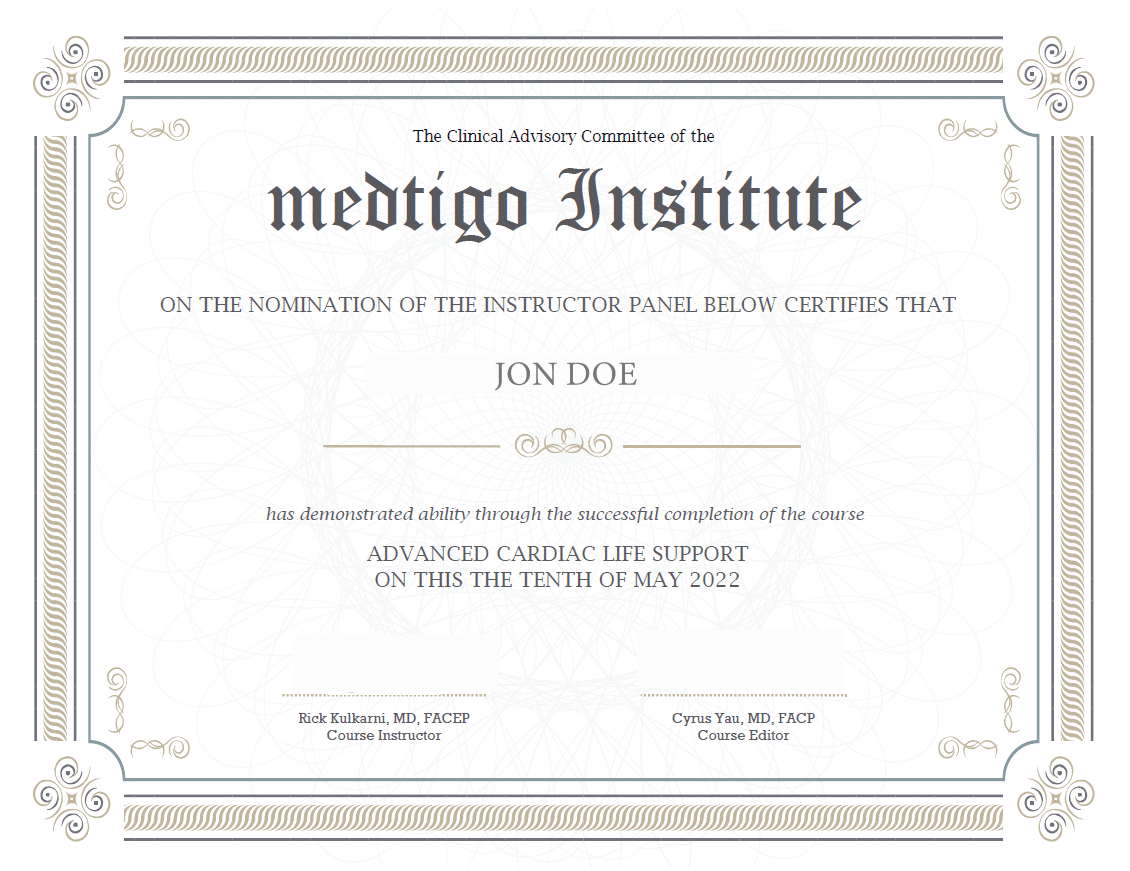
On course completion, you will receive a full-sized presentation quality digital certificate.
A dynamic medical simulation platform designed to train healthcare professionals and students to effectively run code situations through an immersive hands-on experience in a live, interactive 3D environment.
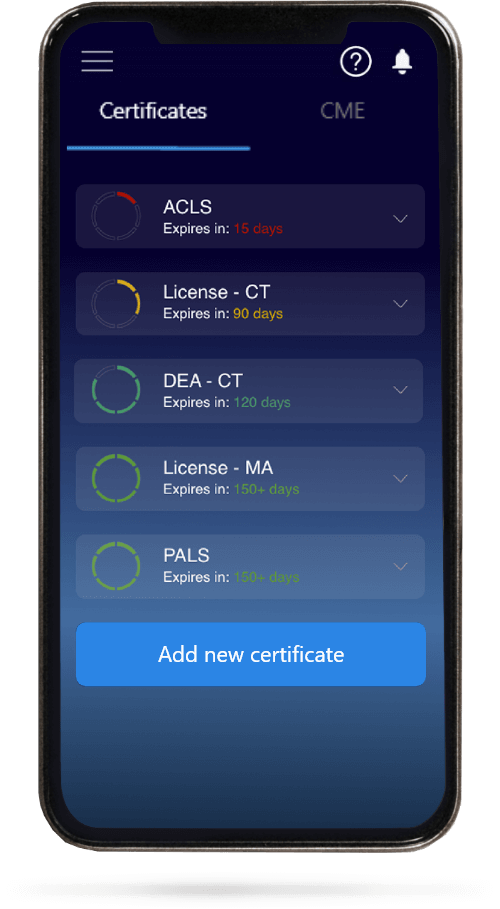
When you have your licenses, certificates and CMEs in one place, it's easier to track your career growth. You can easily share these with hospitals as well, using your medtigo app.