Abdominal Fat Linked More Strongly to Heart Failure Than BMI
March 19, 2026






Background
Warts are benign skin and mucous membrane growths due to the human papillomavirus (HPV), which exists in more than 100 subtypes. HPV can be found in any part of the body and there are formations such as skin warts, genital warts, flat warts, deep warts on palms and soles known as Myrmecia, focal epithelial hyperplasia, Epidermodysplasia verruciformis, plantar cysts and others. Warts can be transmitted through direct or indirect contact and instances where the skin barrier is compromised and increases the chances of developing warts. Some of the HPV types include 6, 11, 16, 18, 31, and 35, are associated with cancers especially in case of in persons with genital warts or immunocompromised persons. Also, HPV types such as 5, 8, 20, and 47 fall under the oncogenic group that causes epidermodysplasia verruciformis.
Epidemiology
Anatomy
Pathophysiology
Of the 100 HPV subtypes, some of them are considered high-risk HPV as they are associated with cancerous cells. These include types 6, 11, 16, 18, 31, and 35, of which the ones that transform more malignantly are those associated with genital warts and immunocompromised persons. However, HPV types 5, 8, 20, and 47 may also lead to malignancy in cases of epidermodysplasia verruciformis.
Although most warts are usually benign, there have been instances where the disease has advanced to verrucous carcinoma. This type of carcinoma is a malignant neoplasm, very slow growing and well-differentiated squamous cell cancer that resemble a verruca vulgaris. It may occur at any site on the body but is more commonly found in the plantar region.
Etiology
HPV has over 100 types and of them only a few results in the formation of skin warts at certain body regions. However, HPV tends to move around the different parts of the body through skin. It regularly results in genital warts, flat warts and palmoplantar warts. It spreads through direct or indirect touch due to skin to skin contact especially when the outer skin barrier has been broken. In most instances, HPV affects only the epithelial layers of the skin; therefore, systemic spread is highly rare. Virus targets the upper epithelial layers, but it has been observed that viral particles may also reside in the basal layer.
Specific HPV types are associated with different types of warts:
Common warts: Types 2 and 4 were most common, then types 1, 3, 27, 29, and 57.
Flat warts: Types 3, 10 and 28.
Deep palmoplantar warts: Type 1 was most frequently observed, with types 2, 3, 4, 27, and 57 also present.
Cystic warts: Type 60.
Focal epithelial hyperplasia: Types 13 and 32.
Butcher’s warts: Type 7.
Genetics
Prognostic Factors
About 66% of warts are known to naturally disappear gradually within the duration of 2 to 3 years, thus making it difficult to determine the efficacy of therapies. Warts that tend to resolve independently are not likely to have residual effects, such as scarring. On the other hand, most of the topical treatments for warts can cause moderate to severe skin scarring. Also, the number of patients who fail to respond to treatment is high, causing pain and severe scarring.
Clinical History
Age group
Warts in children and teenagers within the age group of 12 to 16 years are particularly at risk of developing warts and these include plantar warts, flat warts, and common warts. Warts can also develop in adults; they can develop genital warts, or they may develop warts in certain workplaces. Even elderly people develop warts, though they might not as frequently as they used to since HPV exposure is limited and immune responses change.
Physical Examination
Age group
Associated comorbidity
Associated activity
Acuity of presentation
Acute Onset: Common warts usually appear over time and can take anywhere between weeks and months to fully manifest. It is not usually found, but the warts may begin to stand out, or cause symptoms such as pain, burning or itching if it becomes irritated or infected.
Chronic: Generally, warts may take several months to even years before they are imprecated without treatment. The changes can be inconspicuous and slow, in some cases the warts may increase in size or numbers.
Differential Diagnoses
Laboratory Studies
Imaging Studies
Procedures
Histologic Findings
Staging
Treatment Paradigm
Initial Management: Since approximately 60% of warts regress on their own within 24 months, observation is sometimes recommended. This approach reduces the likelihood of a patient receiving treatment when the problem may clear up on its own. However, there are several complications which include chances of developing bigger warts or having them spread on the skin.
First-Line Treatments:
Topical Agents:
Second-Line Treatments:
Intralesional Injections:
Surgical Treatments:
Systemic Treatments:
by Stage
by Modality
Chemotherapy
Radiation Therapy
Surgical Interventions
Hormone Therapy
Immunotherapy
Hyperthermia
Photodynamic Therapy
Stem Cell Transplant
Targeted Therapy
Palliative Care
use-of-a-non-pharmacological-approach-for-treating-warts
Role of Topical Agents
Role of Cryotherapy
Role of Intralesional injections
Role of Systemic Treatments
use-of-intervention-with-a-procedure-in-treating-warts
use-of-phases-in-managing-wart
Wart management is a stepwise process which depends on the signs and symptoms, the patient himself or herself and the response to the treatment.
First, an attempt is made to classify the wart based on its type and site and to evaluate the patient’s characteristics, such as age and immune system, as 60% of warts disappear within two years without treatment. Initial interventions involve the use of topical medications such as salicylic acid, which forms the basis of most first-line treatments for warts, and cryotherapy in which the wart is exposed to the effect of liquid nitrogen.
The second line treatment for the hard to remove, unreceptive warts include the invasive methods like laser therapy, electrosurgery, and intralesional bleomycin or candida antigen injections. Benzodiazepines are used for generalized or long-standing manifestations; cimetidine, isotretinoin or cidofovir are regarded as advanced and systemic procedures combined with immunomodulating preparations to enhance the immune functions. Adhesive treatment, hypnosis, and hyperthermia, as well as the use of propolis and plant extracts are also used as non-drug options for managing symptoms.
Medication
dosage is 1.5 grams taken orally three times a day
Apply 10% solution twice a day onto the affected areas
Anogenital warts
Topical application for anogenital warts involves the use of a 0.5% gel
In adults, the recommended dosage is to apply the gel twice daily for three days
The treatment can be repeated weekly for 4 or 5 weeks if necessary
The maximum daily amount should not exceed 0.5 grams, covering an area of wart tissue up to 10 square centimeters
The exact dosage as adults applies to children aged 12 years and older
This approach provides specific guidance for the targeted treatment of anogenital warts, ensuring proper application and duration for effective management
Dose Adjustments
Limited data is available
The application of bloodroot containing ointment is applied on the affected area 1 to 2 times a day
Anogenital warts
Topical application for anogenital warts involves the use of a 0.5% gel
In adults, the recommended dosage is to apply the gel twice daily for three days
The treatment can be repeated weekly for 4 or 5 weeks if necessary
The maximum daily amount should not exceed 0.5 grams, covering an area of wart tissue up to 10 square centimeters
The exact dosage as adults applies to children aged 12 years and older
This approach provides specific guidance for the targeted treatment of anogenital warts, ensuring proper application and duration for effective management
Safety and efficacy are not seen in pediatrics < 12
Future Trends
References
Warts are benign skin and mucous membrane growths due to the human papillomavirus (HPV), which exists in more than 100 subtypes. HPV can be found in any part of the body and there are formations such as skin warts, genital warts, flat warts, deep warts on palms and soles known as Myrmecia, focal epithelial hyperplasia, Epidermodysplasia verruciformis, plantar cysts and others. Warts can be transmitted through direct or indirect contact and instances where the skin barrier is compromised and increases the chances of developing warts. Some of the HPV types include 6, 11, 16, 18, 31, and 35, are associated with cancers especially in case of in persons with genital warts or immunocompromised persons. Also, HPV types such as 5, 8, 20, and 47 fall under the oncogenic group that causes epidermodysplasia verruciformis.
Of the 100 HPV subtypes, some of them are considered high-risk HPV as they are associated with cancerous cells. These include types 6, 11, 16, 18, 31, and 35, of which the ones that transform more malignantly are those associated with genital warts and immunocompromised persons. However, HPV types 5, 8, 20, and 47 may also lead to malignancy in cases of epidermodysplasia verruciformis.
Although most warts are usually benign, there have been instances where the disease has advanced to verrucous carcinoma. This type of carcinoma is a malignant neoplasm, very slow growing and well-differentiated squamous cell cancer that resemble a verruca vulgaris. It may occur at any site on the body but is more commonly found in the plantar region.
HPV has over 100 types and of them only a few results in the formation of skin warts at certain body regions. However, HPV tends to move around the different parts of the body through skin. It regularly results in genital warts, flat warts and palmoplantar warts. It spreads through direct or indirect touch due to skin to skin contact especially when the outer skin barrier has been broken. In most instances, HPV affects only the epithelial layers of the skin; therefore, systemic spread is highly rare. Virus targets the upper epithelial layers, but it has been observed that viral particles may also reside in the basal layer.
Specific HPV types are associated with different types of warts:
Common warts: Types 2 and 4 were most common, then types 1, 3, 27, 29, and 57.
Flat warts: Types 3, 10 and 28.
Deep palmoplantar warts: Type 1 was most frequently observed, with types 2, 3, 4, 27, and 57 also present.
Cystic warts: Type 60.
Focal epithelial hyperplasia: Types 13 and 32.
Butcher’s warts: Type 7.
About 66% of warts are known to naturally disappear gradually within the duration of 2 to 3 years, thus making it difficult to determine the efficacy of therapies. Warts that tend to resolve independently are not likely to have residual effects, such as scarring. On the other hand, most of the topical treatments for warts can cause moderate to severe skin scarring. Also, the number of patients who fail to respond to treatment is high, causing pain and severe scarring.
Age group
Warts in children and teenagers within the age group of 12 to 16 years are particularly at risk of developing warts and these include plantar warts, flat warts, and common warts. Warts can also develop in adults; they can develop genital warts, or they may develop warts in certain workplaces. Even elderly people develop warts, though they might not as frequently as they used to since HPV exposure is limited and immune responses change.
Acute Onset: Common warts usually appear over time and can take anywhere between weeks and months to fully manifest. It is not usually found, but the warts may begin to stand out, or cause symptoms such as pain, burning or itching if it becomes irritated or infected.
Chronic: Generally, warts may take several months to even years before they are imprecated without treatment. The changes can be inconspicuous and slow, in some cases the warts may increase in size or numbers.
Initial Management: Since approximately 60% of warts regress on their own within 24 months, observation is sometimes recommended. This approach reduces the likelihood of a patient receiving treatment when the problem may clear up on its own. However, there are several complications which include chances of developing bigger warts or having them spread on the skin.
First-Line Treatments:
Topical Agents:
Second-Line Treatments:
Intralesional Injections:
Surgical Treatments:
Systemic Treatments:
Dermatology, General
Dermatology, General
Dermatology, General
Dermatology, General
Dermatology, General
Dermatology, General
Wart management is a stepwise process which depends on the signs and symptoms, the patient himself or herself and the response to the treatment.
First, an attempt is made to classify the wart based on its type and site and to evaluate the patient’s characteristics, such as age and immune system, as 60% of warts disappear within two years without treatment. Initial interventions involve the use of topical medications such as salicylic acid, which forms the basis of most first-line treatments for warts, and cryotherapy in which the wart is exposed to the effect of liquid nitrogen.
The second line treatment for the hard to remove, unreceptive warts include the invasive methods like laser therapy, electrosurgery, and intralesional bleomycin or candida antigen injections. Benzodiazepines are used for generalized or long-standing manifestations; cimetidine, isotretinoin or cidofovir are regarded as advanced and systemic procedures combined with immunomodulating preparations to enhance the immune functions. Adhesive treatment, hypnosis, and hyperthermia, as well as the use of propolis and plant extracts are also used as non-drug options for managing symptoms.

Warts are benign skin and mucous membrane growths due to the human papillomavirus (HPV), which exists in more than 100 subtypes. HPV can be found in any part of the body and there are formations such as skin warts, genital warts, flat warts, deep warts on palms and soles known as Myrmecia, focal epithelial hyperplasia, Epidermodysplasia verruciformis, plantar cysts and others. Warts can be transmitted through direct or indirect contact and instances where the skin barrier is compromised and increases the chances of developing warts. Some of the HPV types include 6, 11, 16, 18, 31, and 35, are associated with cancers especially in case of in persons with genital warts or immunocompromised persons. Also, HPV types such as 5, 8, 20, and 47 fall under the oncogenic group that causes epidermodysplasia verruciformis.
Of the 100 HPV subtypes, some of them are considered high-risk HPV as they are associated with cancerous cells. These include types 6, 11, 16, 18, 31, and 35, of which the ones that transform more malignantly are those associated with genital warts and immunocompromised persons. However, HPV types 5, 8, 20, and 47 may also lead to malignancy in cases of epidermodysplasia verruciformis.
Although most warts are usually benign, there have been instances where the disease has advanced to verrucous carcinoma. This type of carcinoma is a malignant neoplasm, very slow growing and well-differentiated squamous cell cancer that resemble a verruca vulgaris. It may occur at any site on the body but is more commonly found in the plantar region.
HPV has over 100 types and of them only a few results in the formation of skin warts at certain body regions. However, HPV tends to move around the different parts of the body through skin. It regularly results in genital warts, flat warts and palmoplantar warts. It spreads through direct or indirect touch due to skin to skin contact especially when the outer skin barrier has been broken. In most instances, HPV affects only the epithelial layers of the skin; therefore, systemic spread is highly rare. Virus targets the upper epithelial layers, but it has been observed that viral particles may also reside in the basal layer.
Specific HPV types are associated with different types of warts:
Common warts: Types 2 and 4 were most common, then types 1, 3, 27, 29, and 57.
Flat warts: Types 3, 10 and 28.
Deep palmoplantar warts: Type 1 was most frequently observed, with types 2, 3, 4, 27, and 57 also present.
Cystic warts: Type 60.
Focal epithelial hyperplasia: Types 13 and 32.
Butcher’s warts: Type 7.
About 66% of warts are known to naturally disappear gradually within the duration of 2 to 3 years, thus making it difficult to determine the efficacy of therapies. Warts that tend to resolve independently are not likely to have residual effects, such as scarring. On the other hand, most of the topical treatments for warts can cause moderate to severe skin scarring. Also, the number of patients who fail to respond to treatment is high, causing pain and severe scarring.
Age group
Warts in children and teenagers within the age group of 12 to 16 years are particularly at risk of developing warts and these include plantar warts, flat warts, and common warts. Warts can also develop in adults; they can develop genital warts, or they may develop warts in certain workplaces. Even elderly people develop warts, though they might not as frequently as they used to since HPV exposure is limited and immune responses change.
Acute Onset: Common warts usually appear over time and can take anywhere between weeks and months to fully manifest. It is not usually found, but the warts may begin to stand out, or cause symptoms such as pain, burning or itching if it becomes irritated or infected.
Chronic: Generally, warts may take several months to even years before they are imprecated without treatment. The changes can be inconspicuous and slow, in some cases the warts may increase in size or numbers.
Initial Management: Since approximately 60% of warts regress on their own within 24 months, observation is sometimes recommended. This approach reduces the likelihood of a patient receiving treatment when the problem may clear up on its own. However, there are several complications which include chances of developing bigger warts or having them spread on the skin.
First-Line Treatments:
Topical Agents:
Second-Line Treatments:
Intralesional Injections:
Surgical Treatments:
Systemic Treatments:
Dermatology, General
Dermatology, General
Dermatology, General
Dermatology, General
Dermatology, General
Dermatology, General
Wart management is a stepwise process which depends on the signs and symptoms, the patient himself or herself and the response to the treatment.
First, an attempt is made to classify the wart based on its type and site and to evaluate the patient’s characteristics, such as age and immune system, as 60% of warts disappear within two years without treatment. Initial interventions involve the use of topical medications such as salicylic acid, which forms the basis of most first-line treatments for warts, and cryotherapy in which the wart is exposed to the effect of liquid nitrogen.
The second line treatment for the hard to remove, unreceptive warts include the invasive methods like laser therapy, electrosurgery, and intralesional bleomycin or candida antigen injections. Benzodiazepines are used for generalized or long-standing manifestations; cimetidine, isotretinoin or cidofovir are regarded as advanced and systemic procedures combined with immunomodulating preparations to enhance the immune functions. Adhesive treatment, hypnosis, and hyperthermia, as well as the use of propolis and plant extracts are also used as non-drug options for managing symptoms.

Both our subscription plans include Free CME/CPD AMA PRA Category 1 credits.
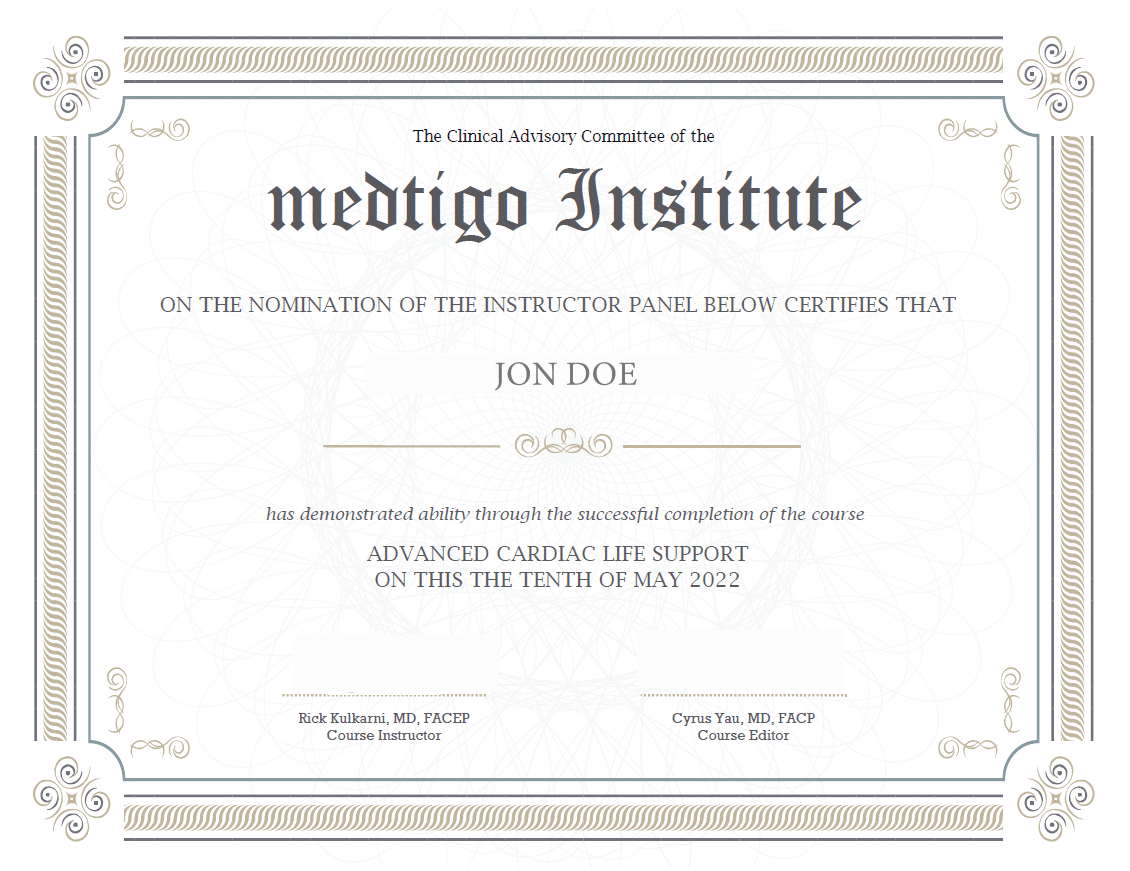
On course completion, you will receive a full-sized presentation quality digital certificate.
A dynamic medical simulation platform designed to train healthcare professionals and students to effectively run code situations through an immersive hands-on experience in a live, interactive 3D environment.

When you have your licenses, certificates and CMEs in one place, it's easier to track your career growth. You can easily share these with hospitals as well, using your medtigo app.